Well I figured I'd use my sports writing to publish an opinion related to baseball.
Don't assume by the title that I am blaming Nolan Ryan for the rise in Tommy John surgery. Nolan Ryan retired in 1993. He is one of the best pitchers ever. He is by definition one of the hardest workers ever. I've read that he pitched year-round while many others were not. His numbers don't lie that it benefited him. However, I believe that what was good for Ryan is not good for everybody.
Take a look at this list on MLB.com. http://mlbreports.com/tj-surgery/
The first Tommy John surgery was performed on it's namesake Tommy John in 1974. It was revolutionary as this injury normally ended a pitcher's career. But notice throughout the 70's there was only one other Tommy John surgery performed. The next one after 1977 would be in 1985 on David Wells, then steady after that it went from a rate of 1-2 every year up 10 in 1996. This tended to balloon to around 20 in 1999, about 30 in 2002, and from the looks of it in 2012 the numbers get even worse. According to many sources, 1/3rd of active major league pitchers have undergone the surgery sometime in their life. After 1997 you never again see a number of surgeries less than 10 in the Majors. Keep in mind this is not counting the number of high school, college, and minor league pitchers having the surgery. The years from 1985 up when the sunset on Nolan Ryan's career, seemed to bring about this mentality for young and upcoming pitchers that they have to have an overpowering fastball, and be like Nolan Ryan. So, year-round pitching becomes a trend. Keep in mind that pitching is not a natural motion and puts wear on the arm and shoulder. The UCL in the elbow is flexible, but has proven to be fragile when overused.
I've been watching my hometown Braves for years. during the era of the trio, Maddux and Glavine were not known as overpowering pitchers. Smoltz who got inducted into the hall of fame today was. Smoltz is the first pitcher to go into the hall of fame after having the surgery. I personally find it a travesty that Tommy John himself didn't when you look at his numbers. Smoltz of course would transition to closer and play 7 more years in his career between starting and closing. I really agree with Smoltz said today about year-round pitching. He mentioned that there are many players having the surgery by the age of 14. Another fair reminder is careers usually do not survive a 2nd surgery. I've found often that players who have the surgery at a young age will later re-injure themselves and need it again. The Braves has two promising pitchers coming up a few seasons ago in Brandon Beechy and Kris Medlen. Within just a span of less than 4 years, both of them went from dominating the league to their 2nd Tommy John surgery, and my team is in rebuilding mode. These two were suppose to anchor the rotation for years to come. They dominated hitters during their healthy years. Many stars on other teams ended up having the surgery after their first year pitching. Strasburg, Harvey, and Wheeler are just some examples of guys who maybe one injury away from a 2nd and usually career ending T.J. surgery.
I've also noticed that there is more emphasis on an overpowering fastball in scouting to. For example it is hard to get drafted out of college unless you have a 95mph fastball. Glavine and Maddux were control pitchers with low 90's fastballs, and they still performed better than many power pitchers. I've heard so many people say that they want to pitch year-round to add some heat to their fastball, but really you are not really much more dominate by adding 3 more mph to your 92mph fastball. I am at the belief that that extra heat is not worth ruining a pitching arm.
Somewhere mistakes have been made, as Smoltz pointed out we may never see another 300 game winner again if this continues. The sad thing is, it is preventable. This did not happen much before meaning it is not suppose to happen.
Just because this technique made Nolan Ryan a champion does not mean it will make your children champions. Most likely it will tear up their arms.
Sunday, July 26, 2015

Wednesday, August 3, 2011
Graniteville Mill close-up
Since I fell behind on my blogging the following happened almost a year ago. You'll remember that in 2009 I posted a blog about Graniteville mill and talked about how I wish I could get a tour. Well in 2010 when I signed up for Aiken Tech's digital photography class I got my wish my instructor had somehow permission for us to go inside the mill. In the end we even got some stuff printed and displayed which a lot of my photography is sitting on display in the Hickman Hall office. So what you are about to see is sights that many people never get to see.
The mill has been inactive since 2006 however signs of decay are noticed on entry. Though not near as decayed as Clearwater finishing and a little more cleaned up as the shutdown of this mill was much more orderly. Still you can see several signs of how time stands still and that's what us urban explorers love.

 Yes the Ivy is not only growing over the window but through it as well.
 A few steps in and I'm already finding discarded materials like this Winch operating manual.

So we enter the warehouse which I was expecting to be a total wreck instead it's kind of sort of a wreck.

I'm guessing this was a supervisor's office still left pretty well in tact.

Not sure exactly what these were used for but whenever I walked over the boards it always felt like I was going to fall through the floor. Our guide assured us we wouldn't and of course nobody did it was just a feeling.
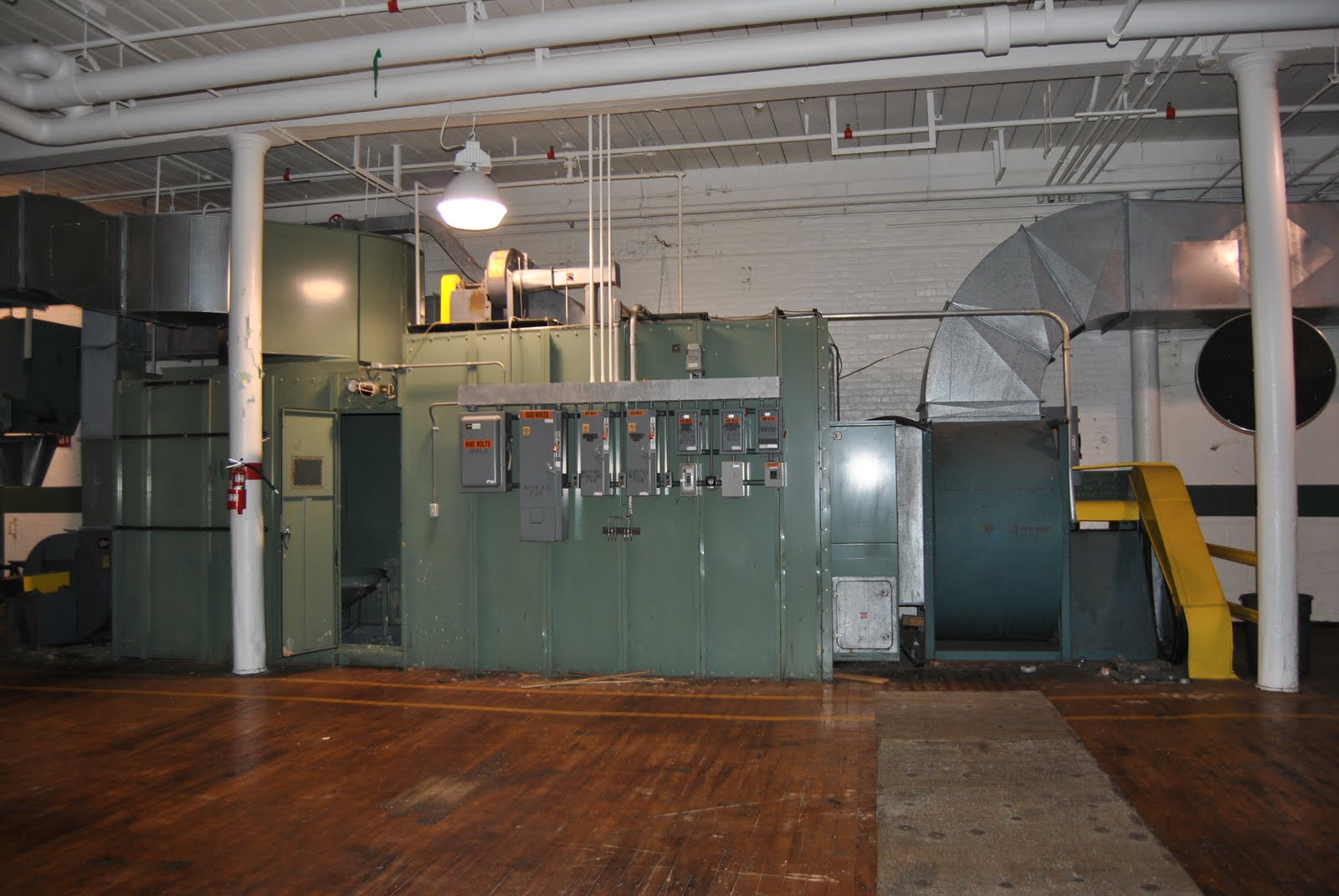
Inside these lockers is what I believe is an old cotton gin, I could be wrong. From the outside it reminds me of a locker. The lower floor does have power to.


I went into the opened door and this is the machinery inside. Looks like cotton would slide down a shoot into this locker onto this cylinder.

Just because I had the urge to here's a little bit of my photoshope effects put to work.

Paint starting to chip off in flakes.

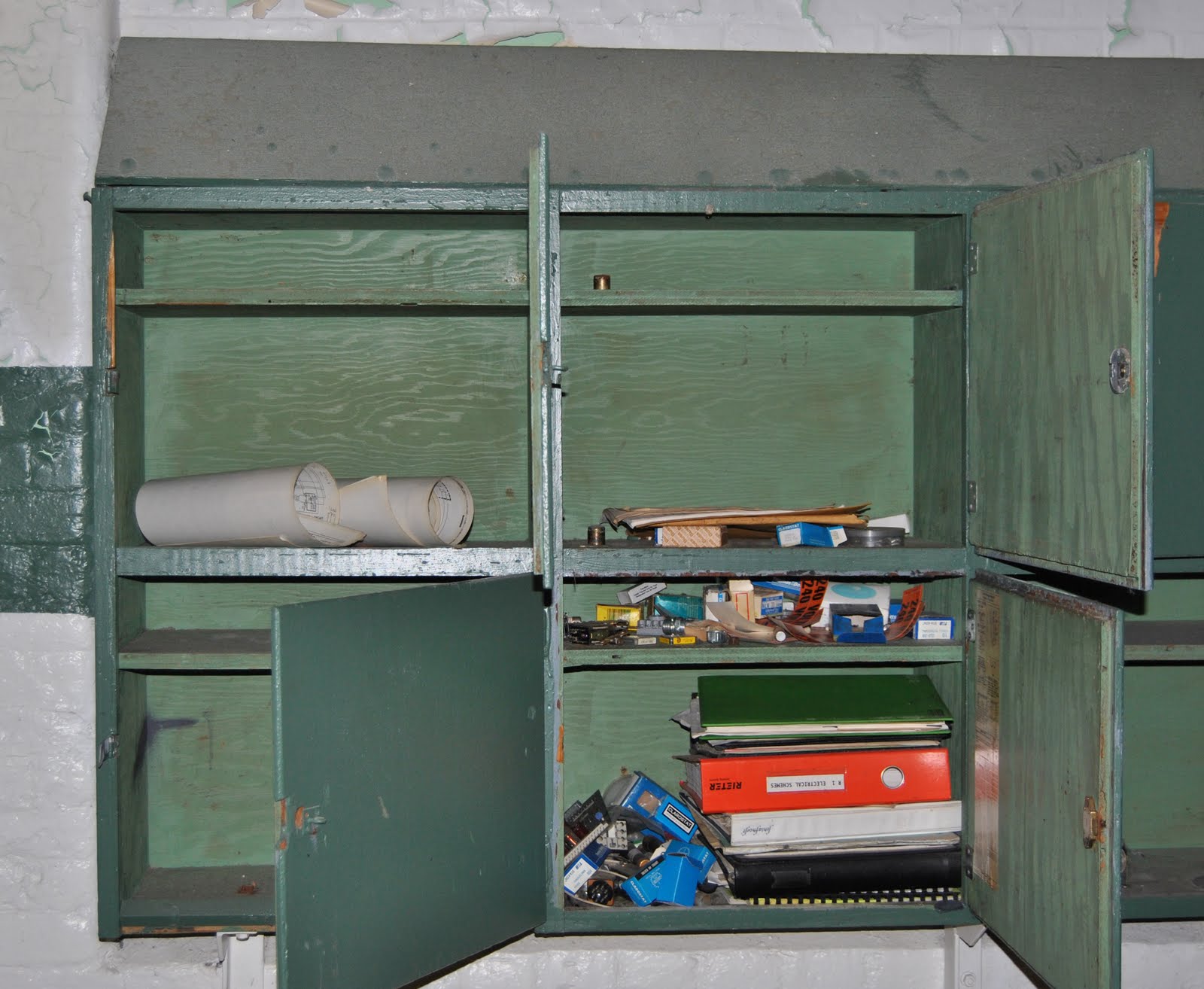
Old personal belongings left behind possibly by workers.

Stair to this door must have been portable.

Lots of phones and computer equipment just left here in the office. The roof has been leaking. Another sign of decay as I'm still on the ground level yet this leak has apparently made it through both floors.


When I talk about things that make time stand still this is what I mean. As you can see sheets of paper with names of shift managers and papers dated from late July 2006 about the time the mill closed. In this photos are also job postings, safety policies and emergency plans.

Another piece of machinery I can't tell what it is.

Another office I think.

On the 2nd floor nature had set in a bit. Some cracks in the building allowed pigeons to fly in and nest. I also saw where predators had been in there as well according to our guide a hawk had been in there. So along with the live birds it wasn't uncommon to find a body of a dead pigeon on the floor every now and then.

Looks like some kind of supervisor's window where they would stay in the small room and watch the workers to make sure nobody got out of line.

Not sure what the number system is about here.
.

Before I go to my time exposures here's a little more traditional stuff.


While my classmates were running around bouncing flashlight beams throughout the warehouse I was bent on doing more traditional exposure using natural lighting. I did a lot of long exposure while in Hickman Hall and got some awesome results. The black and white out really pans out on a cloudy day like that day. The problem was many of my long exposure shots had flashlight beams caught in them from my classmates in the background so also black and white helped me eliminate the unnatural lighting. It's frustrating when you're shooting 30+ second long exposure tripod shots and there is always something moving through the frame that is undesired. My main objective was to let the light through the vents do it's own work. To start there are still a few old pieces of machinery still up there. While I don't know what this thing did. I tried like eight different times to get a 30 second time exposure and every time one of my classmates ether went flying through the background creating a light ghost effect or they were shinning a light under it. Here you can see the lighting is not completely natural ether. One of my classmates was shinning a light under this machine while I was taking my time exposure. Often times I found myself having to work ahead of everybody else and I had to get it done before anybody else entered the room but this is easier said then done when you're doing time exposures.

Close-up of the control panel.

I love that creepy lighting, the woman in the office really likes this one to.

More of that lighting.

So we departed Hickman Hall

Next it was through the fence and into the oldest part of the mill. This area is not a place for the screamish of course nobody in my class was screamish. The conditions in there were horrid though. We didn't go in the worst parts of course. The worst parts of this section of the mill are already leaking, molding, or falling in. So we wouldn't go in there not because we were scared but because we're not stupid. Those places are so rundown that to set foot in those structures would be totally stupid. Above is my close up of the steam valves.


This is one of those buildings we wouldn't be setting foot in. Word is it has a turbine located underneath it from way back then the creek's flow used power the mill.

High voltage

There is Sulfuric Acid here to.


We had to cross this bridge which has all kinds of crap growing on it and some of the foot boards are rotted so in some places we were walking the plank.

First thing I notice is this small green shack. What it's function was I don't know but it had a few interesting things.

 These two fire extinguishers are still in place. I believe the paper attached to them may be their inspection paper.

Old Modine Gas heating unit.

A friendly reminder of another hazard asbestos.


Another structure we would not be entering.


 Inside the thing posted above.

 Trees growing up the old stairs.

 It seems that around 1944 this is where delivery trucks used to come in. I figure by it's condition the practice must have ended before the mill closed in 2006. Judging by the decay over here this section of the mill looks like it might have started decaying while the mill was still open. Probably was the first section of the mill to close down.


A few more old gadgets.
That was all for that trip but two week later we were back at the mill doing some exterior shots.
 I started my exterior assault by going over the small brick wall. Only thing was the hole was deeper than it looked. As you can see from this photo the growth was pretty much up to my eyes. Walking in there was really hard to because the surface was slippery and muddy to make things worst it had also just rained that day. I believe there used to be a building where I was standing because tons of broken bricks were scattered everywhere. Because the walls were higher than I thought getting out of the pit was difficult. I eventually found a hole in the bottom of one section of the wall and was able to crawl out of there.


I was the only one in my class who would walk on the old railroad trestle and get the back view of the mill. The trestle and mill spur are obviously inactive. As a railfan I'd never climb on an active railroad line. The Bridge is in good condition with a few wood planks rotting and trees growing through it of course. But it is strong enough to support the weight of several people walking on it.


A few various rusted and burnt out items.
 I was told this was an old electrical shack.
 Steven's steam plant's huge water tank.


Steven's steam plant, ground zero of for the train wreck site.
Well that concludes this blog hope you enjoyed. Not every day I get this privileged to check out something this amazing. I was very lucky to see the inside of this place before they tear it down. When they will I don't know. I'm sure it probably won't get near as ugly as Clearwater finishing.
Signed
Joseph W. Johns
Subscribe to:
Posts (Atom)